Black Rain, Burning Skies, and the Warning of the Dukhaan

Right now as I write this, in parts of Iran, the horizon is completely covered. The sun is not visible. Oil refineries have exploded. The sky is filled with thick, dirty smoke — and people are reporting something else entirely: the rain itself is dark, oily, and black. This article examines what is happening scientifically, what it means historically, and — most urgently — what the Messenger of Allah ﷺ warned us over fourteen hundred years ago.

What Is Black Rain?
When oil refineries or fuel depots explode, enormous quantities of petroleum combust simultaneously. This process produces massive clouds of soot, ash, hydrocarbons, and a cocktail of toxic chemicals. These particles are extraordinarily fine — many are smaller than one micron — which allows them to rise high into the troposphere and stratosphere, far above normal weather systems.
Atmospheric winds then carry these particles across entire regions and sometimes across entire continents. The particles do not simply vanish. They remain suspended for weeks or months. And when moisture begins to condense around these polluted particles in the upper atmosphere, the soot and oil residue mix intimately with rain droplets.
The result is what scientists call black rain — precipitation contaminated with oil particles, soot, polycyclic aromatic hydrocarbons (PAHs), and toxic chemical residue.
This is not science fiction. It has happened before in modern history, and when it does, the consequences ripple outward in every direction — into the soil, into the water, into the food supply, and into the bodies of millions of people who may live hundreds of kilometres from the original explosion.

The Gulf War of 1991: A Modern Precedent
History has already shown us exactly what happens when oil infrastructure burns on a massive scale. During the Gulf War in 1991, retreating Iraqi forces deliberately set fire to over 700 Kuwaiti oil wells. What followed was one of the greatest environmental catastrophes in modern history — and a chilling preview of what large-scale petroleum fires can do to an entire region.
For months, the sky over Kuwait and surrounding regions remained dark. In some areas, the sun was barely visible even during the middle of the day. Temperatures across the region dropped significantly as the soot blocked incoming solar radiation. Black snow — soot particles mixed with moisture — fell across the land.
Satellite images showed enormous plumes of smoke stretching from the Gulf all the way toward South Asia. Scientists measured elevated soot levels as far away as China and the Himalayas.
On the ground in Kuwait, the effects were devastating. Crops failed. Livestock died from grazing on contaminated pasture. Water sources turned black and were rendered unusable.
The soil in entire farming regions was coated in a thick layer of oily residue. Many Kuwaiti farmers could not plant crops for several growing seasons. Local food production collapsed. And the health consequences for the population — respiratory disease, skin conditions, cancer rates — continued to emerge for decades afterward.
It took over nine months and a team of over 10,000 firefighters from around the world to finally extinguish all the burning wells. The total oil burned is estimated at over one billion barrels.
The Cascade: From Smoke to Famine

The chain of consequences that follows large-scale petroleum fires does not stop at the sky. The destruction moves downward — through the atmosphere into the soil, through the soil into the food supply, and through the food supply into the lives of millions of people who may never even see the smoke itself.
When soot and petroleum particles fall onto farmland, they coat leaves and soil in a dark, impermeable residue. Leaves covered in black soot cannot perform photosynthesis efficiently. Sunlight — already reduced by the smoke above — struggles to penetrate the residue coating the plant's surface. Photosynthesis slows. Growth stops. Crops wither.
Entire harvests fail simultaneously across vast agricultural regions.
The soil itself suffers damage that can persist for years or even decades. Oil residues contain compounds that are toxic to the beneficial microbes and fungi that make soil fertile. Without these organisms, soil loses its capacity to support plant life.
Groundwater and irrigation systems become contaminated. Rivers carry the pollutants downstream into agricultural valleys. Even livestock grazing on contaminated grass absorb toxic compounds and become sick.
The entire foundation of the food system begins to crack — not in one dramatic moment, but in a slow, grinding collapse that accelerates over months and years.
The Human Body Under Smoke
While crops fail in the fields, the human body faces its own crisis. Smoke from burning petroleum contains extraordinarily fine particulate matter — particles measured in fractions of a micron — that bypass the body's natural defenses entirely. The nose and throat, designed to filter larger particles, cannot stop particles this small. They penetrate directly into the deepest chambers of the lungs.
The immediate effects are severe. Asthma attacks spike dramatically. Breathing difficulties affect even those with no prior respiratory history. Fine particulate matter inflames the airways and causes the delicate tissues of the lung to swell and harden. For the elderly and the very young, whose respiratory systems are least able to compensate, even short-term exposure to heavy petroleum smoke can be fatal. Emergency rooms in affected areas become overwhelmed within days of a major refinery fire.
The longer-term effects are equally alarming. Many of the chemicals released during petroleum combustion — benzene, formaldehyde, 1,3-butadiene, and dozens of PAHs — are classified as confirmed or probable human carcinogens. Long-term exposure at even relatively low concentrations significantly increases rates of leukemia, lung cancer, bladder cancer, and lymphoma.
Studies conducted on populations exposed to the Kuwait oil fires showed measurably elevated cancer rates in the years and decades that followed.
Heart attacks and strokes also increase, as fine particles enter the bloodstream and trigger inflammation in arterial walls.
Respiratory Crisis
Ultra-fine particles penetrate deep into the lungs, triggering asthma, bronchitis, and acute respiratory failure — even in previously healthy individuals
Cardiovascular Damage
Particles enter the bloodstream directly, inflaming arterial walls and dramatically increasing the risk of heart attacks and strokes
Cancer Risk
Benzene, PAHs, and formaldehyde released in petroleum fires are confirmed carcinogens; elevated cancer rates persist in exposed populations for decades

This Is a Global Agricultural Threat
It is tempting to think of an oil refinery explosion in Iran as a regional event — something affecting one country, one population, contained within one set of borders.
This is precisely the wrong way to think about it. Modern food systems are global. Agricultural seasons are interconnected. And the atmosphere has no borders whatsoever.
The modern world's food supply operates on extraordinarily thin margins. Global grain reserves — the amount of cereal grains stored and available for consumption — typically represent no more than sixty to ninety days of global consumption. There is no vast hidden stockpile. When a significant portion of the world's agricultural production fails simultaneously — as would happen if petroleum fires darkened the sky across major farming regions of Asia, the Middle East, or Europe — the impact on global food prices and availability would be near-instantaneous.
Food travels thousands of kilometres before it reaches any plate. Wheat grown in Ukraine feeds populations in Egypt, Lebanon, and Yemen. Rice grown in Vietnam reaches tables in West Africa. The interconnectedness that makes the global food system efficient also makes it catastrophically fragile. Remove sunlight from enough of the planet's farmland for long enough, and entire civilisations begin to starve — regardless of whether those civilisations had any connection to the original event that darkened the sky.
"Food systems depend on sunlight, clean soil, and clean water. Take those away — and crops do not grow. Food supplies collapse. And people begin to starve."

The Qur'an Spoke of This — Fourteen Centuries Ago
Long before the age of oil refineries, long before the industrial revolution, long before any human civilization had the capacity to fill the sky with petroleum smoke — Allah ﷻ revealed a warning in the Qur'an that describes exactly what we are witnessing.
In Surah Ad-Dukhaan (Chapter 44), Allah ﷻ says:
"فَارْتَقِبْ يَوْمَ تَأْتِى ٱلسَّمَآءُ بِدُخَانٍ مُّبِينٍ — يَغْشَى ٱلنَّاسَ ۖ هَـٰذَا عَذَابٌ أَلِيمٌ""Watch for the Day when the sky will bring a visible smoke covering the people — this will be a painful punishment." (Surah Ad-Dukhaan, 44:10-11)
The word Dukhaan (دُخَان) means smoke — but not ordinary smoke. The Qur'anic usage here implies a vast, encompassing, civilization-altering phenomenon. A smoke so immense and so pervasive that it covers the people — not a city, not a region, but humanity. A smoke that brings with it a painful punishment. Allah ﷻ further describes the people's response in verse 12: "Our Lord, remove this punishment from us — verily we are believers."
This is one of the major signs before the Day of Judgment. It is not a metaphor. It is not a description of spiritual darkness. The scholars of tafsir confirm it refers to a literal, physical smoke that will encompass the earth in the final days.
The Dukhaan in the Sunnah: What the Prophet ﷺ Told Us
The Prophet Muhammad ﷺ explicitly named the Dukhaan as one of the major signs (Ashraat as-Saa'ah al-Kubra) that will precede the Day of Judgment. The hadith literature provides us with specific, vivid details that should make every believing heart pause and reflect.
The Prophet ﷺ said: "The Hour will not come until you have seen ten signs — the smoke, the Dajjal, the Beast, the rising of the sun from the west, the descent of 'Isa ibn Maryam, Yajooj and Majooj, three landslides — one in the east, one in the west, and one in Arabia — and a fire which will drive people to their place of assembly."(Sahih Muslim, 2901)
The Dukhaan is listed first among these ten major signs. Some scholars consider its mention first to indicate it may be among the earliest to appear.
Ibn Masud رضي الله عنه, one of the greatest companions and scholars of the Qur'an, affirmed without hesitation that the Dukhaan is a literal sign yet to come — a physical smoke that will envelop the earth, affecting believers and disbelievers differently, and lasting for an extended period described in some narrations as forty days.
The Ten Major Signs: Where Are We?
The ten major signs described by the Prophet ﷺ in Sahih Muslim form a chain — a sequence of earth-shattering events that will culminate in the end of this world as we know it. The Dukhaan stands at the head of this list, and what we are witnessing in the world today — oil refineries burning, skies darkening, black rain falling — reminds us with urgent clarity that the conditions for such events are already in place.
The Prophet ﷺ also said: "The signs will come one after another like beads falling from a necklace when its string is cut." (Reported by Al-Haythami in Majma' az-Zawaid). Once the first major sign appears, the rest follow in rapid succession. This is not a reason for despair — it is a reason for preparation, for awakening, and for returning to Allah ﷻ before the door of repentance closes entirely.
Historical Precedent: The Mongol Devastation and the Darkness That Followed
The Mongol invasions of the 13th century stand as one of the most catastrophic events in Islamic history — and they offer us profound lessons about how civilisations collapse, how quickly complex systems fail, and how the communities that survived were those who had already positioned themselves wisely.
In 1258 CE, Hulagu Khan's forces sacked Baghdad — then the intellectual and cultural capital of the Islamic world. The Abbasid Caliph Al-Musta'sim was executed. The House of Wisdom (Bayt al-Hikmah), containing hundreds of thousands of manuscripts representing centuries of Islamic scholarship in mathematics, medicine, astronomy, and philosophy, was destroyed. The books were thrown into the Tigris River in such quantities that the river reportedly ran black with ink for days.
The irrigation networks of Mesopotamia — sophisticated systems that had supported agriculture for thousands of years — were deliberately destroyed and never fully rebuilt. The region took centuries to recover agriculturally.
Yet not all Muslims perished.
In the mountainous regions of Anatolia, the Caucasus, and Persia, communities survived. In remote agricultural valleys where Mongol cavalry could not manoeuvre effectively, life continued.

Those who had maintained their connection to the land, who grew their own food, who had positioned themselves in defensible terrain away from major urban centres — they endured.
This pattern would repeat itself across human history: when civilisations collapse, the resilient survive. And resilience, almost always, is rooted in the land.
Other Historical Darkened Skies: Lessons Across Centuries
The Year Without a Summer (1816)
When Mount Tambora erupted in 1815, it ejected so much ash and sulfur dioxide into the stratosphere that global temperatures dropped by 0.4–0.7°C. In 1816, crops failed across North America, Europe, and Asia. Famine struck. Food riots erupted in France, Britain, and Switzerland. Entire farming communities collapsed. In New England, snow fell in June. The Rhine flooded. Livestock starved. This single volcanic event — entirely natural — caused a global food crisis demonstrating exactly how dependent human civilization is on unimpeded sunlight reaching the earth's surface.
Hiroshima's Black Rain (1945)
When the atomic bomb was dropped on Hiroshima on August 6, 1945, the explosion sent a massive column of debris, soot, and radioactive particles into the atmosphere. Within hours, a dark, oily, radioactive rain began to fall over a wide area of the city — what survivors called kuroi ame, black rain. This rain contained radioactive fallout mixed with soot and carbon particles from the firestorm below. Survivors who came into contact with it reported chemical burns, severe nausea, and long-term radiation sickness. The Hiroshima black rain represents perhaps the most documented modern example of large-scale atmospheric contamination falling as precipitation.
Nuclear Winter: The Worst Dukhaan Scenario

Modern science has given a name to the most extreme version of sky-darkening: nuclear winter. Scientists first modelled this phenomenon in the 1980s, and the findings were so alarming that they contributed directly to nuclear arms reduction negotiations between superpowers. The mechanism is straightforward but terrifying in its implications.
A large-scale nuclear exchange between major powers would ignite fires across thousands of cities simultaneously. These fires would send enormous quantities of black carbon soot — estimated at 150 million tons or more in a full exchange — into the stratosphere. Unlike tropospheric particles, which are washed out by rain within weeks, stratospheric soot absorbs solar radiation directly, heating itself and rising even higher, where it can persist for years. Global average temperatures could drop by 8–10°C.
Agricultural regions that currently produce the majority of the world's food — the Great Plains of North America, the wheat belts of Russia and Ukraine, the rice paddies of Asia — would experience growing seasons too cold and dark to support crops. Frost could occur in summer. Rain patterns would collapse.
Scientists estimate that even a regional nuclear exchange — between India and Pakistan, for example, using just 100 Hiroshima-sized warheads — could cause a nuclear famine killing up to two billion people worldwide, primarily through crop failure and starvation. A full-scale exchange between major nuclear powers would be far worse. This is not speculation. This is the research into nuclear warfare. And when we read the description of the Dukhaan — a smoke covering the people, lasting forty days, bringing painful punishment — we begin to understand that what seemed impossible to earlier generations is now frighteningly plausible.
The Prophet ﷺ said: "There will come upon the people years of treachery, in which the liar will be believed and the truthful man disbelieved, the traitor will be trusted and the trustworthy man considered a traitor." (Ibn Majah, Sahih) — describing the moral climate that precedes catastrophe.
Modern Infrastructure: A World Built to Burn
Earlier generations could not easily imagine how smoke could cover large regions of the earth. The largest fires they knew were forest fires and burning cities. But today the world is fundamentally different. The modern industrial economy has concentrated explosive, flammable, toxic materials on an almost incomprehensible scale.
Oil Refineries Worldwide
Processing over 100 million barrels of crude oil every single day
Petrochemical Plants
Global facilities producing plastics, chemicals, and fuels — each a potential catastrophic fire source
Barrels of Proven Reserves
Total proven global oil reserves — the fuel load waiting in the earth beneath volatile regions
Nuclear Reactors
Active commercial reactors worldwide, each a potential source of atmospheric contamination in a conflict scenario
If significant numbers of these facilities were destroyed in major regional or global conflicts, the quantities of soot, toxic chemicals, and radioactive particles released into the atmosphere could darken the sky across entire continents. This is why what we are witnessing in Iran today — however localised it may seem — is a reminder of what the world could look like when the full weight of prophecy is fulfilled.
Ahadeeth on the Tribulations Ahead
The Prophet ﷺ was extraordinarily detailed in his descriptions of the tribulations (fitan) that would afflict this Ummah before the Hour. Reading these narrations today — against the backdrop of oil fires, collapsing food systems, and geopolitical chaos — produces a profound sense of recognition.
"There will come a time when holding onto your religion will be like holding onto a burning coal."(Tirmidhi, Hasan)
"The Hour will not come until the land of the Arabs returns to being meadows and rivers."(Sahih Muslim, 157) — Indicating major environmental and climate transformation in the Arabian Peninsula
"Seek refuge with Allah from tribulations, the apparent and hidden ones."(Sahih Muslim) — A du'a the Prophet ﷺ taught regularly, indicating tribulations are a constant reality to guard against
"Hasten to do good deeds before tribulations come like pieces of dark night — a man will wake up as a believer and by evening be a disbeliever, or he will be a believer in the evening and by morning be a disbeliever, selling his religion for a portion of this world."(Sahih Muslim, 118)
These narrations are not presented to cause fear. They are presented because the Prophet ﷺ delivered them as warnings — as a mercy to his Ummah, so that we would not be caught off guard. Preparation begins with knowledge. And knowledge without action is incomplete.
The encouragement to Flee to the Mountains
The Prophet ﷺ did not simply warn about tribulations and leave us without guidance on what to do. He was extraordinarily specific — and one of his most remarkable pieces of guidance concerns where to be when the tribulations intensify.
The Prophet ﷺ said: "The best property of a Muslim in the future will be sheep which he will take to the tops of mountains and to the places of rainfall, fleeing with his religion from the tribulations."(Sahih Bukhari)
This hadith is remarkable in its specificity. The Prophet ﷺ is not speaking metaphorically. He is saying that a time will come when the best choice a Muslim can make is to take his family, take his animals, take his food production capacity — and go to the mountains and the places of rain. Away from the cities. Away from the industrial centres. Away from the interconnected systems that seem like security but are actually fragility.
The Prophet ﷺ also said: "Whoever among you lives to see the Dajjal, let him flee from him. By Allah, a man will approach him thinking he is a believer, then will follow him due to the doubts that he stirs up."(Abu Dawud, Sahih) — The command to flee is repeated across multiple contexts, indicating it is a serious, literal instruction.
The Messenger of Allah ﷺ's specific mention of places of rain alongside mountains is particularly significant in light of what we understand today about atmospheric pollution. As we shall see, there are profound geographical reasons why mountain regions with high rainfall represent genuine sanctuary during periods of widespread atmospheric and environmental contamination.
Why Mountains? The Science Behind the Prophetic Guidance
The Geography of Clean Water
Polluted water flows downhill — always. It follows gravity into rivers, into valleys, into lowland agricultural plains. It collects in reservoirs and irrigation systems that serve flat, densely populated agricultural regions. Mountain springs and streams, fed from above by precipitation falling on high, relatively pristine terrain, are naturally protected from downstream contamination. When oil refineries burn and black rain falls, it falls on everything — but mountainous regions drain this contamination downward and away from their own water sources through natural elevation and gradient.
Distance from Industrial Targets
Mountain regions are almost never the location of oil refineries, petrochemical plants, fuel storage facilities, or nuclear installations. These industries require flat land, transport access, and proximity to markets. They cluster in plains, valleys, coastal areas, and industrial corridors. Mountains are naturally buffered from the direct consequences of industrial disasters by simple geography. The people most at risk in any industrial catastrophe are those living downwind and downstream of industrial zones — not those living in elevated, remote mountainous terrain.
Stronger Wind Dispersal
Mountain environments experience stronger, more consistent winds that help disperse and dilute airborne pollutants far more effectively than still valley or urban air
Higher Rainfall Cleansing
Mountainous regions typically receive significantly higher rainfall, which physically washes contaminants from surfaces, soils, and vegetation faster than arid lowland areas
Natural Defensibility
Throughout history, mountain terrain has provided natural defensive advantage — valleys and passes can be monitored and defended by small numbers against much larger forces
Local Food Production
Terraced mountain agriculture, practiced for millennia across the Muslim world, allows for genuine food self-sufficiency independent of global supply chains
Historical Examples: Mountains as Refuge in Islamic History
The guidance of the Prophet ﷺ to seek the mountains during tribulation was not merely theoretical. Throughout Islamic history, mountain regions repeatedly proved themselves as places of refuge, survival, and resilience when lowland civilisations collapsed.
The Mongol Invasions (1220-1260 CE): As the Mongols swept through Central Asia and the Middle East, destroying Samarkand, Bukhara, Nishapur, Baghdad, and dozens of other great cities, communities in the mountainous regions of Afghanistan, Anatolia, the Caucasus, and highland Persia survived. The terrain itself stopped the Mongol cavalry — the most devastating military force of the medieval world. Mountain communities continued to farm, continued to practice Islam, and ultimately preserved the civilisational continuity that allowed Islam to survive and eventually absorb the Mongols themselves.
The Reconquista and the Moors of the Mountains: As Muslim rule receded in Spain, the last Muslim communities to survive — in some cases for generations — were those in the mountainous regions of the Alpujarras and the Sierra Nevada, where geography provided both natural defense and continued agricultural viability. The flatland cities fell first. The mountains held longest.
The Crusades and the Mountain Fortresses of the Levant (1096–1291 CE): Muslim communities in the mountainous regions of Syria, Lebanon, and Palestine — particularly in areas like the Jabal Ansariyya, the Anti-Lebanon range, and highland Galilee — survived the Crusader onslaught far better than those in the coastal plains and river valleys. Saladin's own campaigns were sustained by mountain supply lines and highland strongholds. The mountains were not merely defensive — they were the logistical backbone of Islamic resistance.
The Chechen and Caucasian Resistance (19th Century): When the Russian Empire expanded southward in the 19th century, it was the mountain peoples of the Caucasus — the Chechens, the Avars, the Circassians — who mounted the most sustained and legendary resistance. Imam Shamil, one of the great mujahideen of Islamic history, operated from the mountain highlands of Dagestan and Chechnya for nearly 25 years. The mountains gave him what no army could provide: terrain, clean water, food, and the ability to disappear and regroup. The lowland peoples were subjugated quickly. The mountain peoples held for generations.
The Afghan Mountains and the Graveyard of Empires: Afghanistan's mountain ranges — the Hindu Kush, the Sulaiman Mountains, the Pamir — have broken every empire that attempted to conquer them. The British Empire failed. The Soviet Union failed. The mountains are not merely a metaphor for resistance — they are a literal, physical reality that has preserved Muslim communities, their deen, their language, and their way of life against the most powerful military forces in modern history.
The Berbers of the Atlas Mountains (North Africa): When Arab and later Ottoman authority weakened, and when colonial powers swept across North Africa, the Berber communities of the Atlas Mountains maintained their independence, their Islamic practice, and their agricultural self-sufficiency for centuries. The French colonial administration famously struggled to penetrate and control the Atlas highlands even as they dominated the coastal cities and plains. Mountain geography was the difference between subjugation and survival.
The pattern is consistent across centuries: when empires fall and cities burn, the mountains endure.
Modern Societies Are Slaves to Supply Chains
One of the most sobering realities of modern life is how completely the average urban or suburban Muslim — indeed, the average human being — is dependent on systems they do not control, do not understand, and cannot repair. The food on the supermarket shelf arrived through a chain of interdependencies so complex and fragile that most people have no awareness of it at all.
Consider the journey of a loaf of bread. The wheat was grown on a large commercial farm using chemical fertilizers derived from natural gas. It was harvested using diesel-powered machinery. It was transported by diesel truck to a processing facility. Milled with electrically powered equipment. Mixed with ingredients sourced from multiple countries. Baked in a gas-powered oven. Packaged using petroleum-derived plastic. Transported again by truck to a distribution centre. Then to a regional warehouse. Then to a supermarket.

Every single one of these steps requires functioning global supply chains, functioning logistics infrastructure, functioning energy systems, and functioning financial systems. Remove any one of them — let alone several simultaneously — and the loaf of bread does not arrive.
The Return to the Land: A Necessity of Our Times
The solution the Messenger of Allah ﷺ pointed toward — sheep, mountains, places of rain — is fundamentally a solution of returning to the land. Of reclaiming the capacity to feed oneself and one's family from the earth directly, without the mediation of supply chains, without the dependency on petrochemical fertilizers, without the fragility of centralized food systems.
Growing food on your own land from organic seeds — seeds you have saved yourself, without pesticides, without chemical inputs that require purchasing and supply chains — is an act of profound practical wisdom AND an act of worship.

The Prophet ﷺ said: "If the Hour is about to be established and one of you has a palm shoot in his hand, let him plant it." (Musnad Ahmad, Sahih) Even at the very moment of the end, we are commanded to plant. To produce. To nurture life from the earth.
This is not romanticism about rural living. This is a matter of life and death — physical survival and spiritual survival.
Communities that produce their own food are communities that can survive famines that destroy dependent urban populations.
Communities with clean water from mountain springs can survive when lowland water systems are contaminated.
Communities with stored organic seeds can plant again after a catastrophic season.
Communities with strong social bonds, deeni focus, and practiced skills of self-sufficiency have always been the ones that survive the collapse of civilisations.
Steps to achieve this:
Secure Land
Identify and acquire agricultural land in elevated, well-watered terrain away from industrial zones and dense urban centres
Learn to Grow
Develop practical skills in organic food production — from soil preparation to seed saving to pest management without chemical inputs
Build Community
No individual family can be fully self-sufficient alone. Build tight-knit communities of believers who share skills, resources, and mutual support
Store Provisions
Maintain meaningful strategic food and water reserves — it is reported from Umar (RA) that the Prophet ﷺ stored food from the sale of the dates of the garden of Banu Nadir for his family for a year
Spiritual Preparation: The Foundation of Everything
All the practical preparation in the world — the mountain land, the organic seeds, the water reserves, the self-sufficient community — means nothing without the foundation of taqwa, Allah ﷻ - consciousness, and sincere return/tauba to Allah ﷻ.
The events approaching the Last Hour are not challenges to be solved by planning & engineering alone. They are tests from Allah ﷻ, designed to separate the sincere from the insincere, the prepared from the heedless, the true believer from those who merely claim belief.
Allah ﷻ says in the Qur'an: "And whoever fears Allah — He will make for him a way out, and will provide for him from where he does not expect. And whoever relies upon Allah — then He is sufficient for him." (Surah At-Talaq, 65:2-3).
This is the ultimate provision. The one who has Allah ﷻ has everything. And the one who has everything material but is distant from Allah ﷻ has nothing of lasting value.
The Prophet ﷺ taught specific du'as for protection from tribulations. Among the most important is reciting at the end of every prayer: Allahuma inni a'udhu bika min 'adhabi jahannam, wa min 'adhabil-qabr, wa min fitnatil-mahya wal-mamat, wa min sharri fitnatil-masihid-dajjal — "O Allah, I seek refuge in You from the punishment of the Hellfire, from the punishment of the grave, from the tribulation of life and death, and from the evil of the tribulation of the Dajjal." This du'a was considered so important that the Prophet ﷺ commanded it be recited in every salah.
"Renew your iman. Renew your iman." — The Prophet ﷺ was asked how iman is renewed. He replied: "By repeating Laa ilaaha illAllah frequently." (Musnad Ahmad, Sahih) Dhikr of Allah ﷻ is not merely devotional — it is the core mechanism by which the believing heart is kept alive and resistant to the confusion of the end times.
Strengthening the Deen: A Practical Curriculum for the End Times
Deep Study of Signs
Study the major and minor signs of the Hour systematically. Know them. Recognise them when they appear. The ignorant are always the most vulnerable to being swept away by events they did not expect. The best way to study the signs is to rely upon the sincere Ulamaa who are knowledgeable on these matters, while being careful of those whose beliefs are not correct
Increase in Ibadah
The Prophet ﷺ said worship during the tribulations is like emigrating to him. Increase your salah, your dhikr, your Qur'an recitation, your tahajjud. These are not luxuries — they are armour.
Strengthen Family Bonds
The family unit is the first line of resilience. Strengthen marriages. Raise children with deep iman and practical skills. Maintain silat al-rahm — ties of kinship — as a living, active practice.
Increase Sadaqah
The Prophet ﷺ said sadaqah extinguishes the anger of the Lord. In a time of escalating divine warnings, generosity — both to those around you and to the Ummah globally — is both worship and protection. Spending on preparations is also part of spending in the path of Allah ﷻ
Sincere Tawbah
Allah ﷻ says: "Do they not see that they are tried once or twice every year? Yet they do not repent, nor do they take heed." (Surah At-Tawbah, 9:126). Every sign is an invitation to return. Do not delay.
Build the Community
The Prophet ﷺ said: "The believer to the believer is like a building — each part strengthens the other."
Intentional community building — not just social, but practical, economically, and spiritually integrated — is the Islamic model for surviving tribulations.
The time for preparation is now. The guidance to seek refuge in the mountains, to cultivate our own sustenance, and to forge strong bonds of community is more relevant than ever.
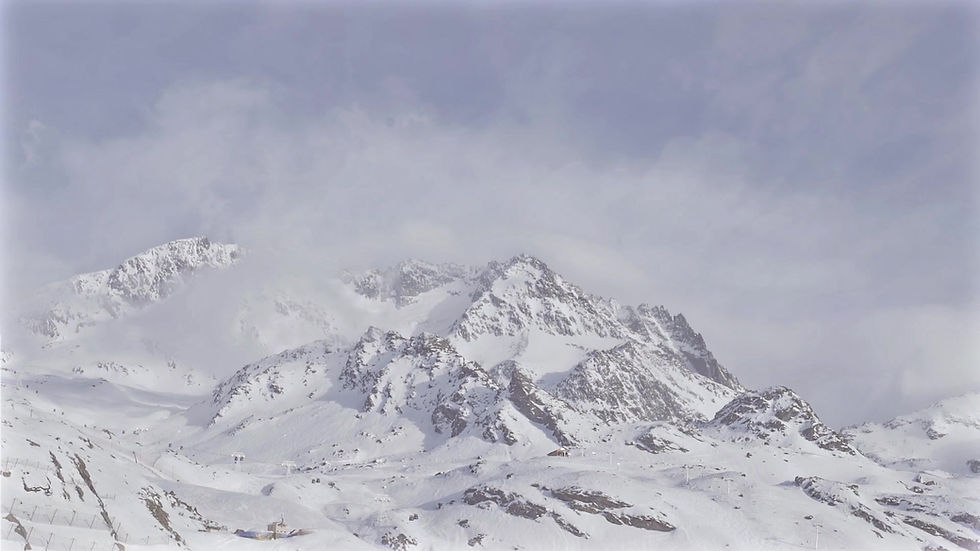
The Peaceful Mountains Estate offers a tangible opportunity to translate this into action. Imagine a life rooted in nature, nourished by the land, and strengthened by a shared purpose, away from the increasing chaos and vulnerabilities of urban centers. This is not just a temporary retreat; it's a proactive step towards resilience, both physical and spiritual, for you and your family.
Elevated Sanctuary
Find peace and security in an elevated mountain environment, offering natural protection and breathtaking vistas away from congested areas.
Pure Water Source
Access pristine, naturally filtered water sources directly from mountain springs, ensuring health and independence.
Productive Land
Cultivate your own organic food on fertile land, mastering self-sufficiency and benefiting from wholesome, pesticide-free produce.
Deen-Centred Community
Live amongst like-minded Muslims, sharing skills, resources, and mutual support in a spiritually vibrant and cohesive environment founded & guided by Ulamaa
Spiritual Nourishment
Foster a deep connection with Allah ﷻ in an environment conducive to increased ibadah, dhikr, and a focus on taleem and khidmat
This is a calling for those ready to act on the guidance and prepare for the future of their progeny. The window of opportunity to establish such foundations is narrowing. Do not delay your decision to secure a future of tranquility and spiritual strength for your children & loved ones.
Take the first step today towards building a resilient, self sufficient life and break the chains of modern slavery.
Reach out to us to learn more about joining the Peaceful Mountains Eco Estate and how you can become part of the community ان شاء الله ﺗﻌﺎﻟﯽٰ


Comments